
Introduction
Let’s be honest for a second. How many people on your team actually feel connected right now?
If that question stings a little, you are not alone.
Here is the reality for 2026. According to Gallup’s latest data, only 20% of employees worldwide feel engaged at work. That means 8 out of 10 people are just going through the motions. And the numbers have dropped for two years in a row now. Global disengagement is costing the economy around $10 trillion in lost productivity every year.
So what is going wrong?
Most teams are still figuring out the hybrid and in-office balance. People sit in meetings. They check boxes. But real connection? That is missing. And without connection, communication suffers. Trust stays weak. People leave.
Here is what the research tells us. Structured office team building fixes this. When teams do intentional activities together, communication improves, trust builds, and retention goes up. It is not about silly games that make everyone cringe. It is about creating real moments where people see each other as humans, not just email addresses.

This guide gives you actionable, low-cost team building activities for work that actually work in 2026. We have pulled together the latest data and expert advice so you can skip the guesswork.
Ready to change how your team feels about showing up each day? Check out these practical ways to build trust and get started.
For a fun, stress-free way to spark conversation across the whole group, grab a copy of this witty sci-fi comedy that everyone can enjoy together.
Why Office Team Building Matters More Than Ever in 2026
So why should you care about office team building right now? Because the workplace has changed in ways we never expected.
Think about your own team. Maybe some people are in the office three days a week. Others are fully remote. And a few float between schedules. That mix creates real challenges. People disappear into silos. They only communicate through Slack or email. And distractions? They are everywhere.
Here is what the data tells us. Global employee engagement dropped to 20% in 2025, down from its 2022 peak of 23%. That is the second consecutive year of decline, according to recent employee engagement statistics for 2026. So despite all the investment in culture and perks, most people are still checked out.
The cost is huge. Disengaged workers are less productive, more likely to leave, and less willing to collaborate. On the flip side, research shows that engaged employees lead to better business outcomes, including higher productivity and significantly lower turnover. That is a direct line to your bottom line.
Here is the thing. You cannot just throw people in a room and hope they connect. The old office vibe where everyone naturally bumped into each other is gone. Without intentional activities, your team stays fragmented. Trust stays weak. And good people start looking for exits.
This is where structured office team building comes in. It is not about forced fun. It is about creating shared moments that break down walls. A simple scavenger hunt for office team building or a few team building games for adults can shift the energy fast.
For team leaders who want to make this stick, we have a practical guide on how a team leader makes team building programs actually work. It covers the mindset and steps to build real connection.
Office team building is not a nice-to-have anymore. In 2026, it is a business necessity. The teams that invest in it will see better communication, stronger trust, and a culture where people actually want to show up.
Quick Win Icebreakers for Daily Meetings
Let’s be real. You have probably sat through meetings that feel dead from the start. People join late. They keep their cameras off. No one says a word until someone asks “Any updates?”.
That is where a quick icebreaker can save the day.
Icebreakers do not have to be fancy or take up a lot of time. In fact, just two to three minutes is enough to reset the energy and build some rapport before diving into the agenda. According to a guide on team icebreaker games, adding short check-ins can boost meeting productivity and make people feel more comfortable with each other.
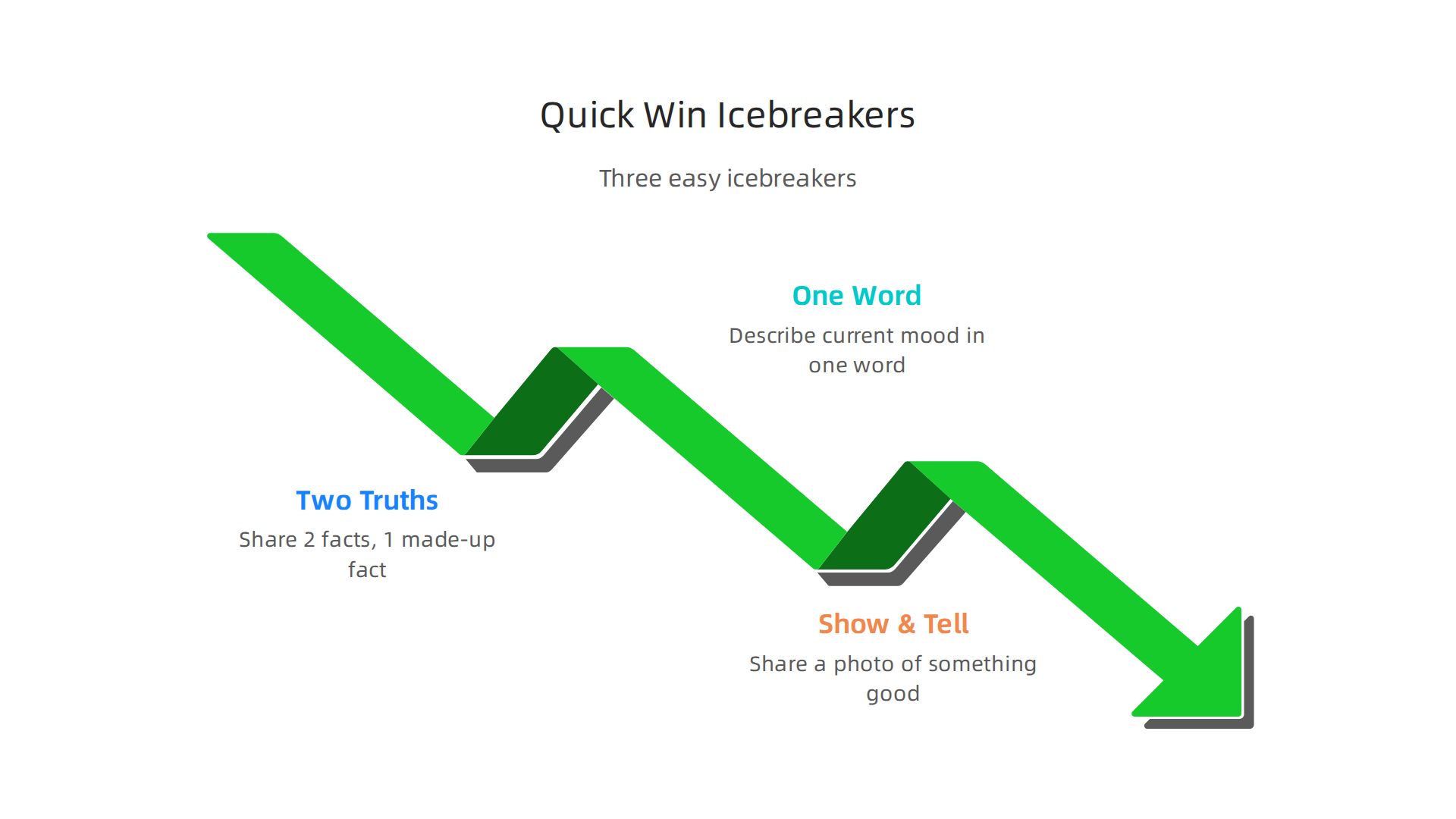
Here are three simple examples you can try tomorrow:
-
Two Truths and a Lie – Each person shares two true facts and one made-up fact. The rest of the team guesses the lie. It is fast, fun, and helps people learn personal things about each other.
-
One Word Check-In – Go around the room and ask everyone to describe their current mood in one word. It takes less than sixty seconds. It gives you a quick read on where people are at.
-
Show & Tell Alternative – Instead of bringing a physical object, ask people to share a photo from their phone that represents something good in their life. It sparks easy conversations.
These types of team building activities for work are not just filler. They fight meeting fatigue. When you use them regularly, people start to open up more. Silence turns into participation. And you build trust little by little.
For more ideas that take almost no effort to set up, check out this list of 10 low-prep games that boost engagement without extra work.
Need a fun way to get everyone talking? Try a lighthearted book that the whole team can read and discuss together. It is a simple way to create shared laughs and easy conversation. Grab it here: Ridiculous comedy book for team discussion.
Problem-Solving Activities That Build Trust
Icebreakers are great for warming up a meeting. But if you want to build real, lasting trust in your office team building efforts, you need to move from quick questions to shared challenges. When people solve a problem together, they learn who has what strengths. They learn to depend on each other.

And they build bonds that no quick check-in can create.
Here is the thing. Trust is not built in a day. It builds one small moment of vulnerability at a time. When your team faces a tricky puzzle or a tight deadline together, they naturally open up and rely on each other. According to FunAmsterdam, the most effective trust-building exercises combine structured communication with shared problem-solving. That combination is powerful.
So what does this look like in practice? One of the best examples is an "Escape Room in a Box." Your team gets a box of puzzles they must solve together. It works like a scavenger hunt for office team building but in a compact package. It forces everyone to speak up and listen. Another great option is a "Team Kaizen" exercise, where the group works together to fix a small, real-world process in the office. For a deeper look at how escape challenges build communication, read our guide on escape room Dallas team building tactics.
These structured team building games for adults do more than just pass the time. They reveal hidden group dynamics. You will quickly see who is a natural leader, who is a careful thinker, and who brings creative ideas. MyCulture.ai notes that problem-solving activities boost collaboration and creativity for both in-person and remote teams. For more structured activities you can run this week, check out our list of online games for remote teams that build connection.
But there is one step you cannot skip. You have to debrief. After the puzzle is solved or the challenge is over, sit down together for ten minutes. Ask simple questions. What worked well? Who helped us move forward? How did it feel to rely on someone else? This reflection is where the real trust cements itself. It turns a fun game into a lasting lesson. Bridgeline Coaching emphasizes that debriefing is crucial to fostering collaboration and trust.
Trust takes consistent effort, but it starts with a single shared experience. Whether you are solving a box of puzzles or fixing a broken process, you are building a stronger foundation. If you want to keep the momentum going outside of formal exercises, a fun shared resource helps. Here is a humorous book that can create easy conversation across the team for a lighthearted way to keep your team laughing and bonding.
Collaborative Challenges to Break Down Silos
Silos are one of the biggest hidden problems in any office. You know the feeling. The sales team does not talk to product. The engineers keep to themselves. And the marketing folks seem to live in a different world. When teams don’t interact, it slows everything down. Projects stall. Misunderstandings grow. And trust never gets a chance to form.
Here is the truth. Silos usually exist simply because people do not understand what other teams actually do. They never get a chance to see each other’s challenges or appreciate each other’s contributions. That is why the best team building activities for work for breaking silos are not just social events. They are structured challenges that force different departments to work together on a real task.
Try something like an "Innovation Sprint." Pick a real business problem that affects multiple teams. Then create small groups made up of people from sales, support, engineering, and marketing. Give them one hour to brainstorm a solution. They have to share their unique knowledge. And they have to listen to perspectives they never hear in their daily routine.

SessionLab has a huge library of similar structured activities that improve teamwork across functions.
Another powerful option is a "Process Improvement Game." Ask each department to list one frustration they have with another team’s output. Then swap the lists. The challenge is to redesign that process together using a simple whiteboard or digital tool. This creates empathy fast. And it directly improves corporate fun activities by turning complaints into collaboration.
The real goal is not just to have fun. It is to create measurable results. After these team building games for adults, you should see faster project handoffs and fewer emails asking for clarification. People start to know who to call and they actually want to help. For more ideas on structuring these exercises, check out our guide on design principles for team collaboration that fix communication problems.
One last tip. Keep the momentum going outside of formal challenges. A shared laugh across departments helps cement the bond you built. Give the group a witty sci-fi comedy to share and discuss. It is a light, easy way for people from different teams to find common ground and keep talking.
Low-Cost, High-Impact In-Office Mixers
The collaborative challenges we just covered are powerful. But you do not need a big event every time to keep the momentum going. In fact, some of the best office team building happens in short, low-cost mixers that fit right into a normal workday.
These mixers cost nearly nothing. Yet they can boost morale and help people connect across departments. The key is consistency. A single event once a year won’t change much. But a monthly mixer keeps the good feelings going without overwhelming anyone’s schedule.
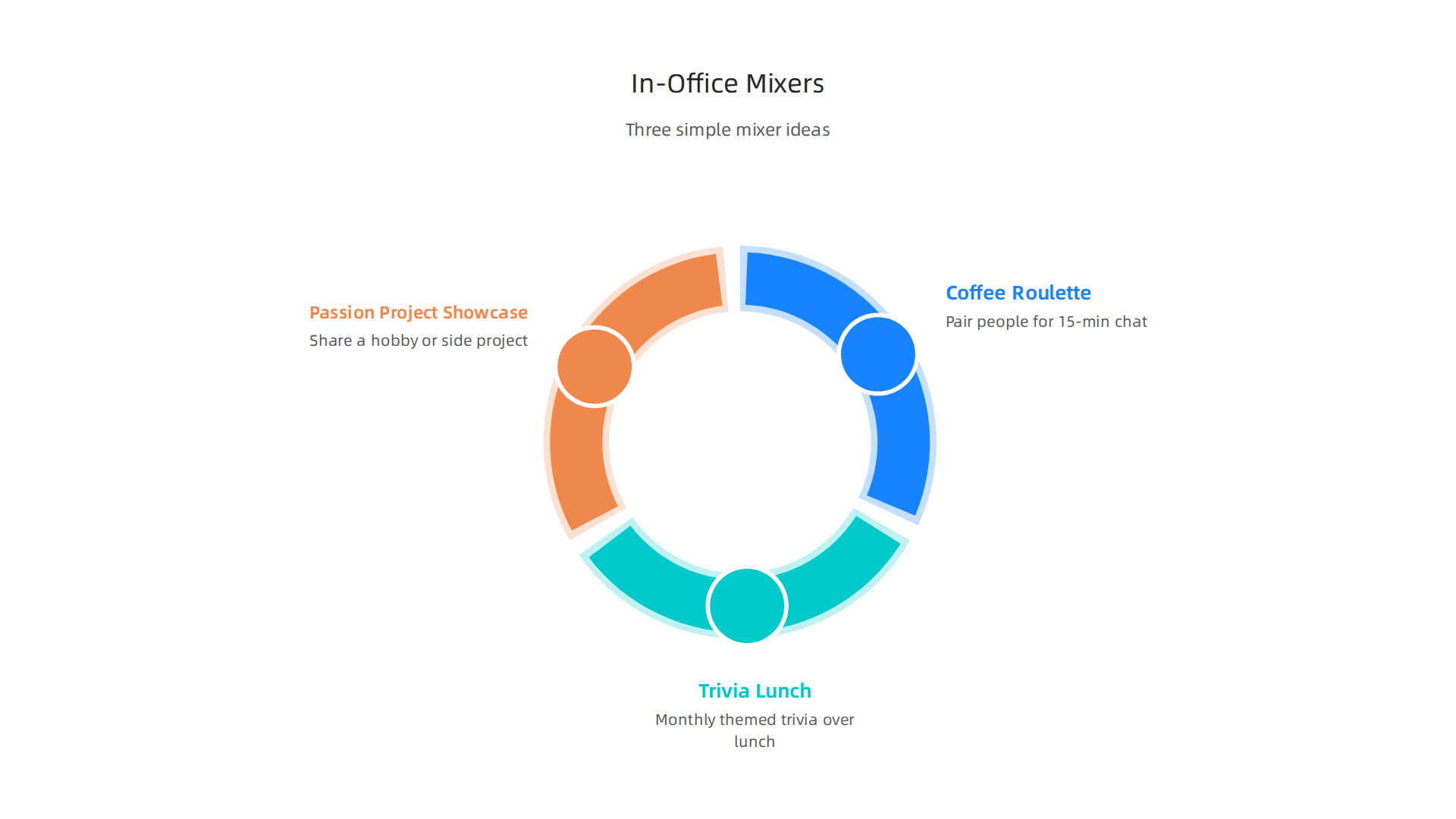
Here are three simple mixers that work well:
-
Coffee Roulette. Pair two people from different teams each week. Give them 15 minutes to grab coffee and chat. No agenda. No work talk allowed. A library of 50 team building activities for employee engagement includes similar low-effort ideas that break the ice fast.
-
Trivia Lunch. Pick a theme each month. Maybe "80s movies" or "world capitals." Ask people to bring their own lunch. Then run 10 quick trivia questions over a shared screen or a whiteboard. Teams of three or four work together. The winning table gets a silly prize, like a funny mug. This is one of the easiest team building activities for work you can try with almost zero prep.
-
Passion Project Showcase. Every month, invite one person to share a hobby or side project for five minutes. It could be woodworking, poetry, or a garden they are proud of. This helps people see each other as humans, not just job titles. It is a great team building game for adults that encourages curiosity and respect.
Mixers like these also work well when you theme them around company culture. For example, if your team loves games, try a board game lunch once a quarter. If your team is fitness focused, do a walking meeting mixer. The more the activity matches your team’s personality, the better the results. You can find lots of indoor team building activities that fit different team styles.
The real magic is in the repetition. Monthly mixers create a habit. People start looking forward to them. And over time, they build a stronger, more connected workplace.
Want to keep the conversation going beyond the mixer? Give the group a witty sci-fi comedy to share and discuss. It is a light, easy way for coworkers to find common ground and keep talking about something fun.
Measuring the ROI of Team Building Efforts
Okay, so you have started running those monthly mixers. Your team seems happier. People are talking more. But how do you really know if it is working? That is the question leaders and HR pros ask all the time.
The truth is, you can measure the impact. It is not just a gut feeling. Smart teams track the ROI of team building to prove the value and keep getting budget support. As of 2026, businesses are seeing clear, measurable results from their office team building investments.
Start with the metrics you probably already track. Look at your engagement survey scores. Check your retention rates. Are fewer people leaving? That is a huge win. You can also watch peer recognition frequency. If more people are shouting each other out on Slack or in meetings, that is a good sign. Research shows that companies investing in regular team building see a 25% jump in overall team results (Sherlocked). That is real ROI.
But you also have to look at the softer stuff. Trust and collaboration can feel vague, but you can measure them. Run a simple survey before a new activity and then again afterward. Ask people to rate statements like "I trust my teammates" or "We communicate well." See the change. This approach aligns with what experts recommend: focusing on observable behavioral change and business outcomes, not just how many people showed up (Team Building Asia).
One tried-and-true framework to guide you is the Kirkpatrick Model. It breaks evaluation into four easy levels:
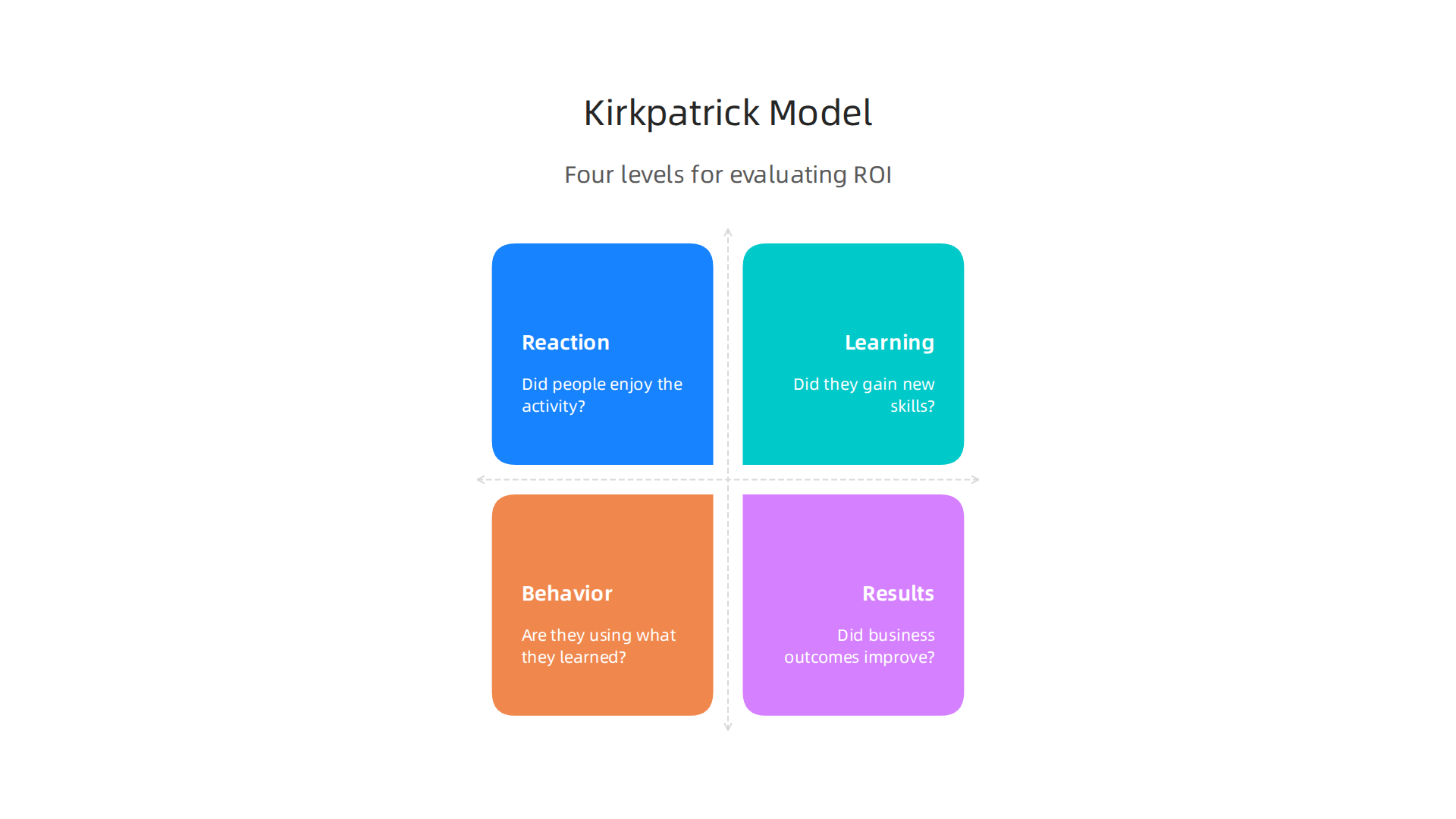
- Reaction. Did people enjoy the activity?
- Learning. Did they gain new skills or understanding?
- Behavior. Are they using what they learned at work?
- Results. Did business outcomes improve?
You can use this model to structure your surveys and conversations. It gives you a clear story to tell leadership. For more on how to apply this, check out our guide on design principles for team collaboration that actually fix communication problems.
Tracking the ROI of team building does not need to be complicated. Pick a few simple metrics, survey your team before and after activities, and use a basic framework. That is all you need to prove your corporate fun activities are worth every minute and dollar.
A Step-by-Step Plan for a Monthly Team Building Calendar
You are already tracking the numbers. You know your team engagement scores and your retention rates. So what now? The next step is to build a rhythm that keeps the good vibes going without burning anyone out. Here is a simple plan for a office team building calendar that actually sticks.
The secret is simple. Consistency beats intensity every time. Planning team building activities for work once a month is way better than forcing a huge retreat once a year. Monthly activities build habits. They create a culture of connection that becomes normal, not forced.
Here is the plan in three easy steps.
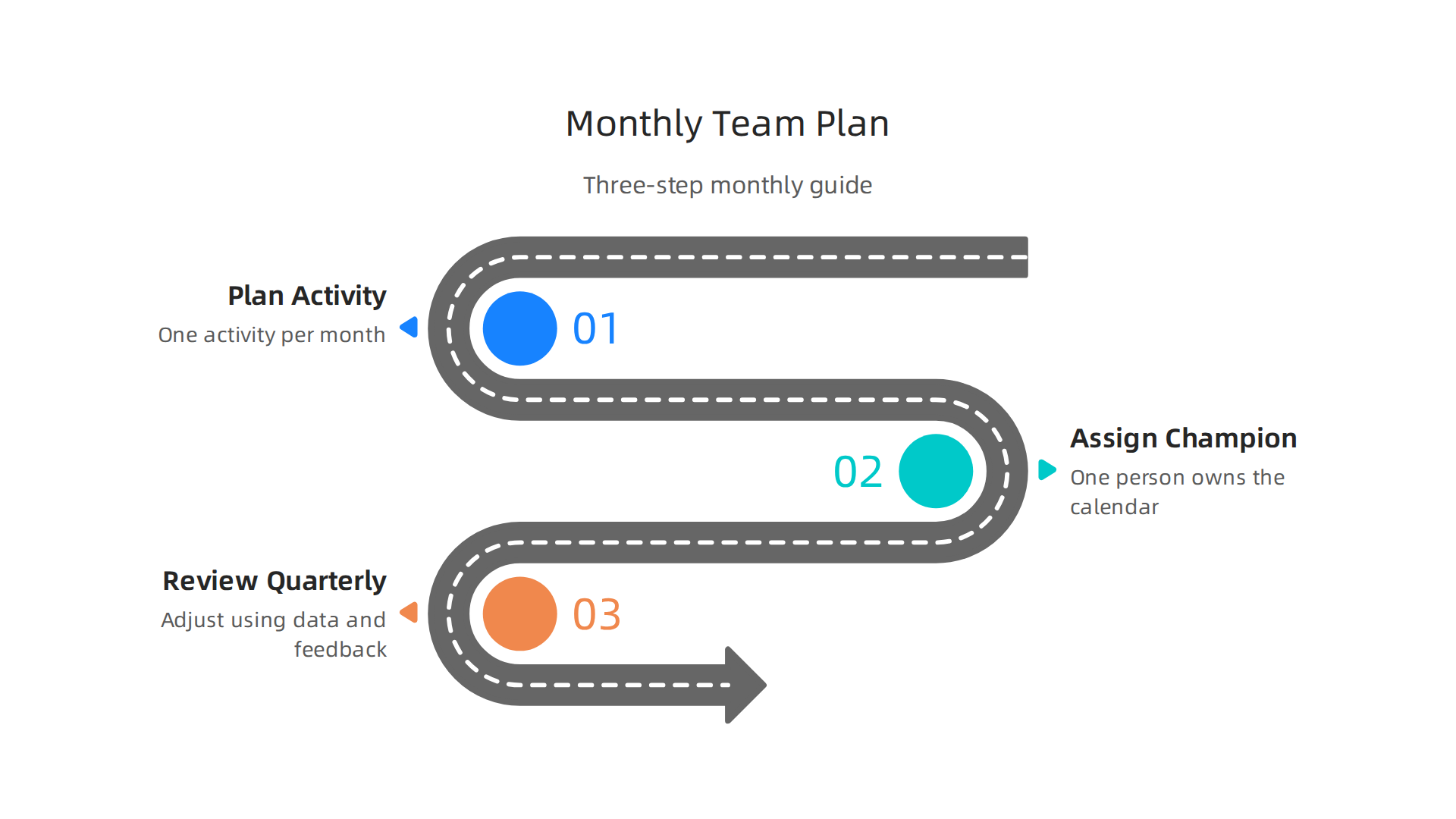
Step 1: Plan one activity per month. That is it. Just one. Rotate the type each time so things stay fresh. For example:
- Month 1: A quick icebreaker (like two truths and a lie)
- Month 2: A team challenge (like a scavenger hunt for office team building)
- Month 3: A social mixer (like a lunch meetup with team building games for adults)
- Month 4: A creative brainstorming session
This rotation keeps every month different. Nobody gets bored. And you cover all the bases: bonding, problem solving, and fun.
Step 2: Assign a Team Culture Champion. This cannot be you all the time. Pick one person who owns the calendar. They gather feedback, schedule activities, and adjust based on what the team actually wants. Having a champion makes the whole process feel less like a chore and more like something everyone owns together. For more on setting up roles and responsibilities, check out our guide on how a team leader makes team building programs actually work.
Step 3: Review every quarter. Use the metrics you are already tracking. Look at participation rates. Ask people what they liked. Adjust the next quarter based on that data. Companies that evaluate their activities regularly see a 25% jump in overall team results, as one analysis found (Sherlocked). So do not just set it and forget it. Tweak as you go.
Need a fresh activity to kick off your calendar? A humorous book can create easy conversation across the team. Grab one here and see how quickly people start talking.
That is it. One activity per month, a champion to run it, and a quarterly check in. That is all you need to make corporate fun activities a normal, lasting part of your team culture.
Adapting Activities for Hybrid and Remote Teams
What if half your team is in the office and the other half is scattered across time zones? The monthly calendar from the last section still works. You just need to tweak a few things.
Here is the truth. The same activity that works in a conference room can work for everyone if you adapt it.

Stream it live. Set up a laptop in the meeting room so remote people can see and hear everything. Use breakout rooms in Zoom or Teams so small groups can chat. This mimics the in person dynamic without leaving anyone out.
Send prep kits ahead of time. For something like a creative challenge or a scavenger hunt, mail a small box to each remote team members home. It makes them feel included. And it turns an office team building exercise into a shared experience.
Use digital tools to level the playing field. Tools like Miro boards, Google Jamboard, or polling apps let everyone contribute at the same time. No one gets talked over. This is one reason why many companies now prefer team building activities for work that work across both settings, as one guide on hybrid team building explains (vostel).
Make inclusion a rule, not an afterthought. Always have someone literally assigned to watch the chat for remote participants. Ask them first. Give them equal time to share. When you plan a scavenger hunt for office team building, create a digital version for remote folks using photos or a shared list.
Need an easy activity to try this week? A shared book can start conversations across the whole team. Grab one here and see how quickly people chat about it in your next video call.
For more ideas that work with distributed teams, check out our guide on virtual team bonding activities that build trust without expensive retreats.
The core lesson is simple. Good corporate fun activities are not about location. They are about intention. Adapt the format, keep everyone visible, and your hybrid team will feel just as connected as an in person one.
Creating a Sustainable Team Building Culture
Adapting one activity is a good start. But to see real change in your office team building efforts, you need a culture that sticks around beyond one fun Friday afternoon. Sustainability is the hard part. Here is how you build it.
Get leadership buy in first. If the boss does not show up or does not value the time, neither will the team. Leaders need to model participation. When they join a team building activities for work session and take it seriously, everyone else follows. That visible support turns a one time event into an ongoing priority. One guide on sustainable team building notes that commitment from the top is what separates effective initiatives from forgotten ones (ForestNation).
Rotate responsibility among team members. Do not let one person plan everything. Give different people the chance to lead. It keeps ideas fresh and makes sure no single voice dominates. If Sarah plans a scavenger hunt for office team building this month, let James plan the next one. This approach also helps quieter team members step up. At the same time, you can explore how to make team building programs actually work with strong leadership to build a consistent rhythm.
Use regular pulse surveys to measure team health. You cannot improve what you do not measure. Send a short anonymous survey every few weeks. Ask simple questions. Do people feel connected? Do they enjoy the activities? Is morale going up or down? When employees see their feedback leads to real changes, they feel heard. This matters for long term corporate fun activities that actually build trust.
A quick way to keep the momentum going is to have a low pressure conversation starter available. Something simple that gets people talking between planned events.
Grab this humorous book here and leave it in a shared space or mention it in your team chat. It sparks casual chats that build the kind of culture you want.
Summary
This article explains why structured office team building is essential in 2026 and shows practical, low-cost activities that create real connection, trust, and measurable business results. It covers quick two- to three-minute icebreakers to warm up meetings, problem-solving exercises like escape-box puzzles that reveal team dynamics, and collaborative sprints that break down interdepartmental silos. You’ll find simple monthly mixer ideas (coffee roulette, trivia lunches, passion showcases) and guidance on running an inclusive program for hybrid and remote employees. The guide explains how to measure impact using easy metrics and the Kirkpatrick framework, plus a three-step plan—one activity per month, a culture champion, and quarterly reviews—to make team building sustainable. After reading, leaders and organizers will be able to pick specific activities, include remote teammates, track results, and set up a repeatable calendar that improves engagement and retention.