

Introduction
It’s 2026, and many teams still work from different places. Whether people are fully remote or split between home and office, keeping everyone feeling like part of the team is a big job for leaders. Studies show that a good number of employees, even those working remotely, don’t always feel fully engaged at work. For example, some reports in early 2026 found that only about 31% of U.S. employees felt truly involved in their work overall, which can be a real challenge for businesses worldwide. Connecting with each other can be tricky when you’re not in the same room every day.

This is where fun team activities come in. Many companies are looking for easy and cheap ways to help their teams connect better. One great option is using addicting games free online. These games don’t cost money and can make people feel closer, even when they’re far apart. They give everyone a chance to laugh, work together, and get to know each other outside of normal work tasks. Finding addicting games online free can be a smart way to boost spirits and make your team stronger.
This guide will help you pick the best team activities. We’ll show you how to lead them well and how to tell if they are actually making your team stronger. You’ll learn how these kinds of online activities can help with team building and why they’re so good for virtual team bonding.
Need more help finding the right team-building activities? Contact Us.
Why Free Addicting Games Work for Team Building
It might feel surprising that something as simple as an online game can actually make your remote team stronger. But there is solid science behind it. Play is a natural human need. It helps us learn faster and connect with others on a deeper level. When you choose addicting games free online, you are using a tool that fights disengagement right where it starts.
Great games tap into three core psychological needs: autonomy, mastery, and relatedness.
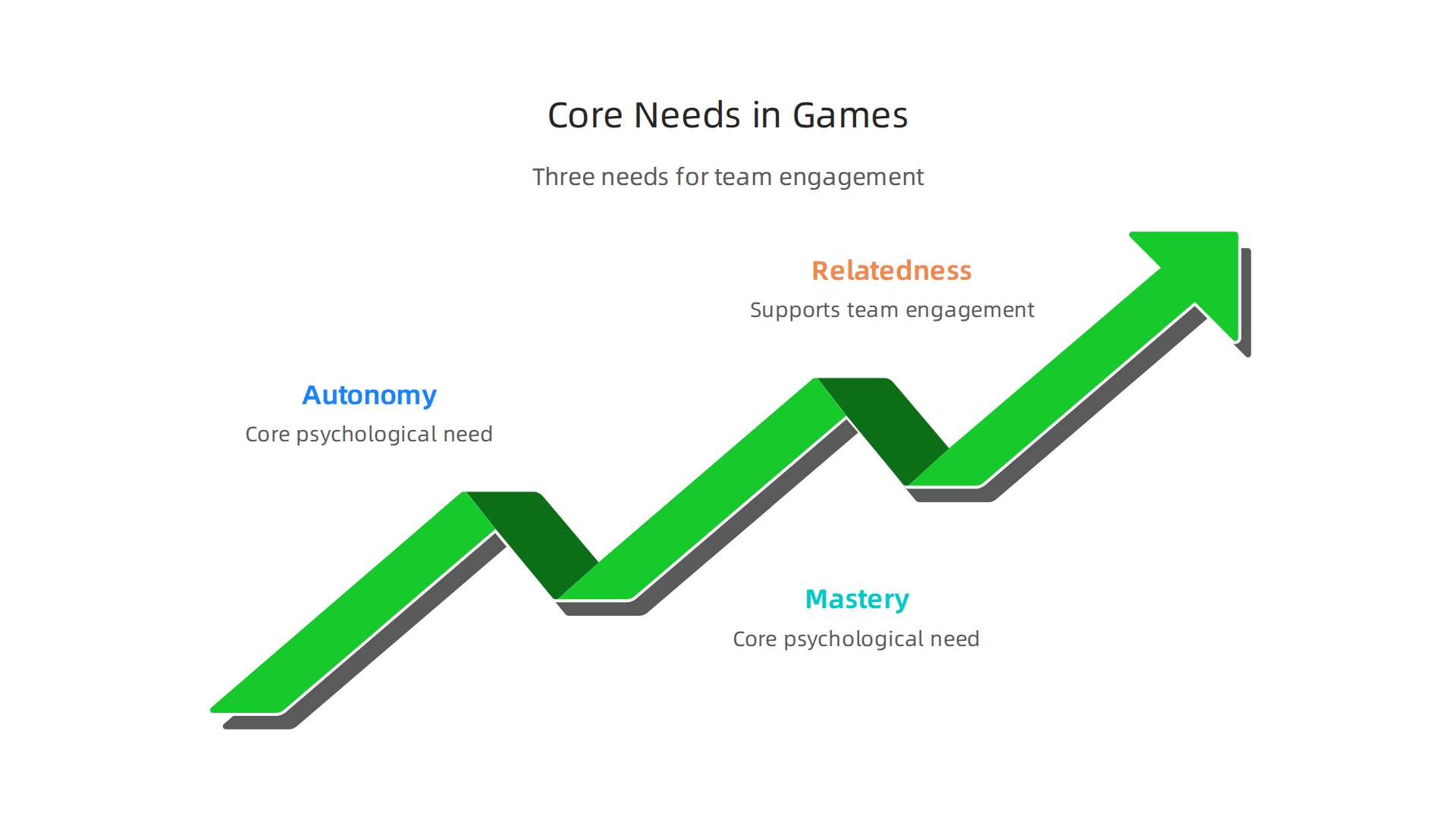
Players feel in control of their choices. They enjoy the challenge of getting better. And most importantly, they share laughs and experiences with coworkers. This combination creates high engagement naturally. It is a powerful team building activity that feels like a fun break rather than boring work.
Another big reason these games work so well is that they remove all the usual barriers to participation. Fancy offsite events cost a lot of money and take a whole day. Complicated exercises need a trained facilitator. But addicting games online free are different. Anyone can join from any device in seconds. There is no pressure and no training needed. This makes it feel safe for everyone on the team, from the quietest person to the busiest leader.
The research backs this up clearly. One study found that teams playing cooperative games together saw a 35% improvement in trust and collaboration. Other studies show that shared fun builds psychological safety. That means people feel safer to speak up, share ideas, and take smart risks at work. Teams with high psychological safety perform much better over time and keep their employees longer. Adding a regular team building activity to your week is a simple way to build this safety.
If you are ready to try this approach with your own group, we have the tools you need. For more structured ideas, check out our guide on team activities for building trust.
Need a fun starting point to get the conversation going? Visit Ridiculous for a funny book that your whole team can read and discuss together. Or reach out to us for a plan that fits your specific goals.
Choosing the Right Game for Your Team: A Practical Framework
So you are sold on the idea of using addicting games free online for your remote team. Now comes the tricky part. With so many options out there, it is easy to get stuck just browsing instead of actually playing. You open one list, then another, and suddenly thirty minutes are gone and no one has played anything.
Here is the thing. You do not need to test every game yourself. You need a simple decision framework that helps you pick the right game fast. Let us break it down into three main filters.
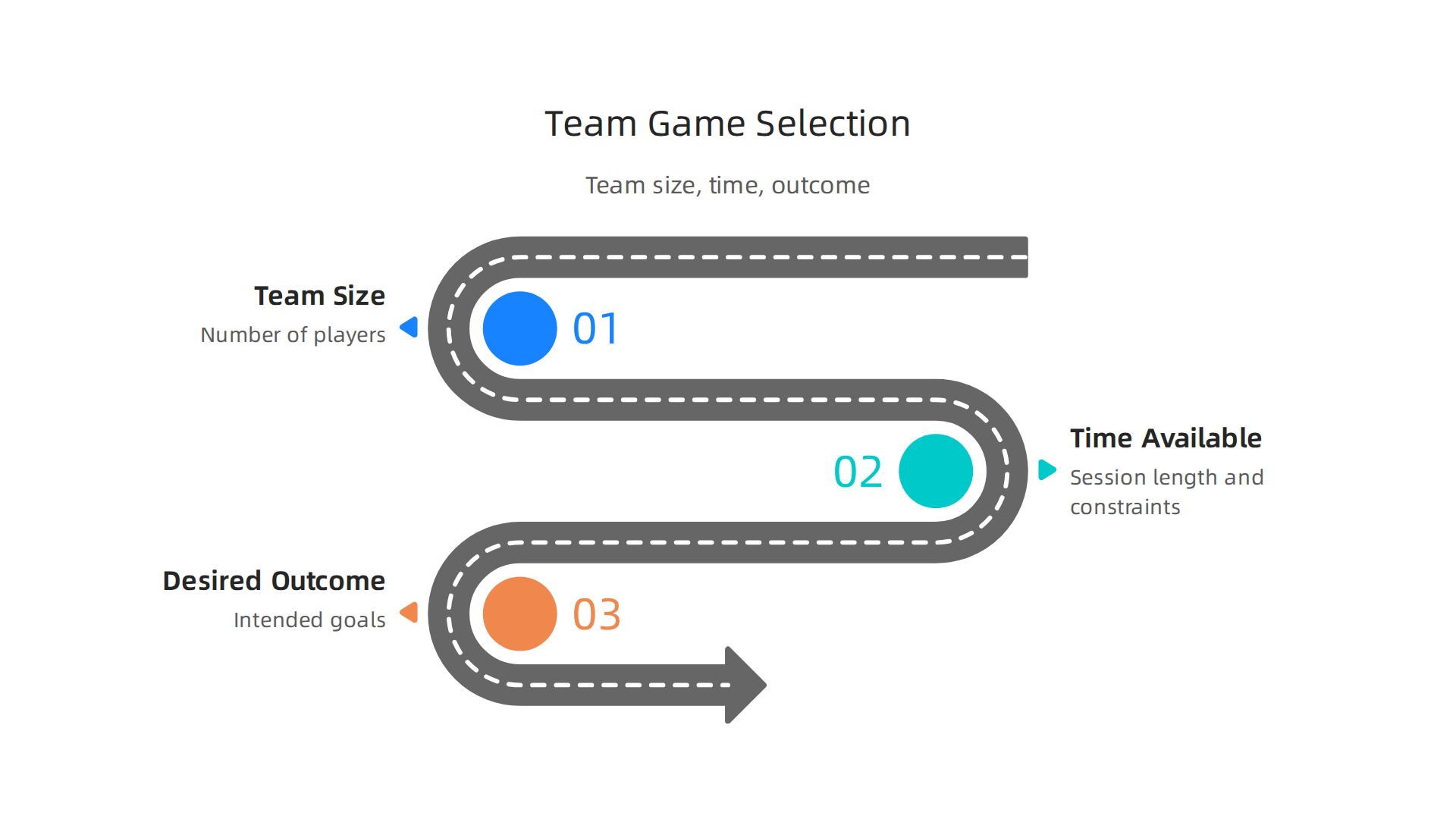
Filter 1: Your Team Size
The number of people playing changes everything. Some addicting games online free work great for groups of four but fall flat with twenty. Quick games like trivia or polls let everyone participate at once, no matter how big the group gets. You can find ideas for teams of any size in this list of free online games for team engagement that actually work.
As a general rule, aim for games where every person gets a turn within the first few minutes. If people wait too long, they check out mentally.
Filter 2: Time Constraints
How long do you actually have? A five minute icebreaker is very different from a thirty minute strategy game.
- Under 5 minutes: Use quick rounds like "Would You Rather" or a GIF battle. These are perfect for the start of a meeting.
- 10 to 15 minutes: Try a fast collaborative game like Codenames or a lightning round of trivia.
- 20 to 30 minutes: Go for a deeper experience like an online escape room or a puzzle challenge. Resources like the Asana guide to team building games can help you match the right game to your schedule.
A common mistake is picking a game that is too long for your available time. Always choose a shorter game than you think you need.
Filter 3: Desired Outcome
What do you actually want to achieve with this team building activity?
- Icebreaking and getting to know each other: Pick simple, low-pressure games like polls, trivia, or sharing funny answers. The goal is laughter, not competition.
- Problem solving and collaboration: Choose games that require teamwork and communication. Virtual escape rooms or cooperative puzzles force the group to work together.
- Creative bonding: Games that let people express themselves, like sharing drawings or telling stories, work well here.
This framework helps you avoid the trap of just picking the first game you see. Instead, you match the game to your real needs.

Putting It All Together
Here is how the framework works in practice.
Start with your team size first. Then check your available time. Finally, decide what outcome matters most. Once you have those three answers, the right game becomes obvious. You can filter through options much faster.
If you want a more structured approach, we have a guide on team activities for building trust that gives you ready to use ideas sorted by these same filters.
And once you pick a game, keep it simple. The goal is connection, not perfection. Your team will appreciate the effort even if things get a little silly. In fact, the silly moments often create the strongest memories.
For a lighter option that sparks easy conversation, try sharing a funny story together. Visit Ridiculous for a humorous book your whole team can read and discuss.

It makes the next icebreaker feel natural and effortless.
Top Free Online Games to Engage Your Team
Now that you have a framework for picking the right game, let us look at the best options available today. I have tested and curated six of the most effective addicting games free online for remote teams. These are all browser based, require no download, and cost nothing to play.
1. GIF Battles (Best for Icebreaking)
Ideal team size: Any. Time needed: 5 minutes. Key benefit: Low pressure fun.
This game is incredibly simple. You share a prompt, like "How I feel on a Monday morning," and everyone responds with the funniest GIF they can find. It is fast, visual, and gets even the quietest team members participating. It is one of the most effective addicting games online free for starting a meeting on a high note. You can find this and other quick ideas on lists like the one from TCWGlobal’s guide to virtual team building games.
2. Gartic Phone (Best for Creativity)
Ideal team size: 4 to 10. Time needed: 10 to 15 minutes. Key benefit: Laughter and connection.
Gartic Phone combines the classic games of Telephone and Pictionary. One person writes a sentence, the next person draws it, the next guesses the drawing, and so on. The results are always hilarious. It is completely free and requires no account to start. Games like this are excellent team activities that create shared memories your team will reference for weeks.
3. Codenames Online (Best for Communication)
Ideal team size: 4 to 8. Time needed: 15 minutes. Key benefit: Teamwork and strategy.
In Codenames, two teams compete to see who can make contact with all of their agents first. Spymasters give one word clues that can point to multiple words on the board. This game forces your team to think alike and communicate clearly. The Parabol blog features Codenames as a top pick for low stress team building.

4. Online Escape Room (Best for Problem Solving)
Ideal team size: 4 to 6. Time needed: 20 to 30 minutes. Key benefit: Deep collaboration.
Virtual escape rooms challenge your team to solve a series of puzzles to "escape" a room within a time limit. Everyone must work together, share what they see, and combine their logic. Sites like Handstand offer virtual puzzle competitions that are perfect for this. It is a powerful team building activity that feels like a real adventure and leaves everyone feeling accomplished.
5. Online Werewolf (Best for Social Deduction)
Ideal team size: 5 to 10. Time needed: 15 to 20 minutes. Key benefit: Engagement and debate.
Also known as Mafia, this classic game has free online versions. Villagers must figure out who the werewolves are before everyone gets eliminated. The werewolves try to blend in and deceive the group. The discussions and accusations that follow are fantastic for breaking down barriers. You can find a free version on VirtualTeambuilding.com’s list of free games.
6. Trivia (Best for Friendly Competition)
Ideal team size: Any. Time needed: 10 to 15 minutes. Key benefit: Knowledge sharing and energy.
You can use a platform like Kahoot! or simply ask questions over a video call. Create rounds about your industry, pop culture, or quirky facts about your team. Trivia is a classic for a reason. It energizes the group and lets people show off what they know. The Asana guide to team building includes trivia as a go to activity for larger groups.
How to Choose from This List
Use the framework from earlier. If you have 5 minutes and a big group, start with GIF Battles. If you have 30 minutes and a small group, try an escape room. Matching the game to your situation guarantees a better experience.
For a more structured approach with ready to use instructions, take a look at our collection of free online games for team engagement that actually work. It organizes games by the same filters we discussed.
And if you want to extend the fun beyond game time, sharing a laugh over a funny story works wonders for team bonding. Visit Ridiculous for a humorous book your whole team can read and discuss together. It turns a simple icebreaker into a natural conversation.
How to Facilitate a Game Session for Maximum Impact
Picking the right game is only half the battle. I have seen plenty of great team activities fall flat because nobody knew how to run them well. Here is the thing: a little bit of planning turns an average game into a memorable experience. Let me walk you through the three phases you need to master.
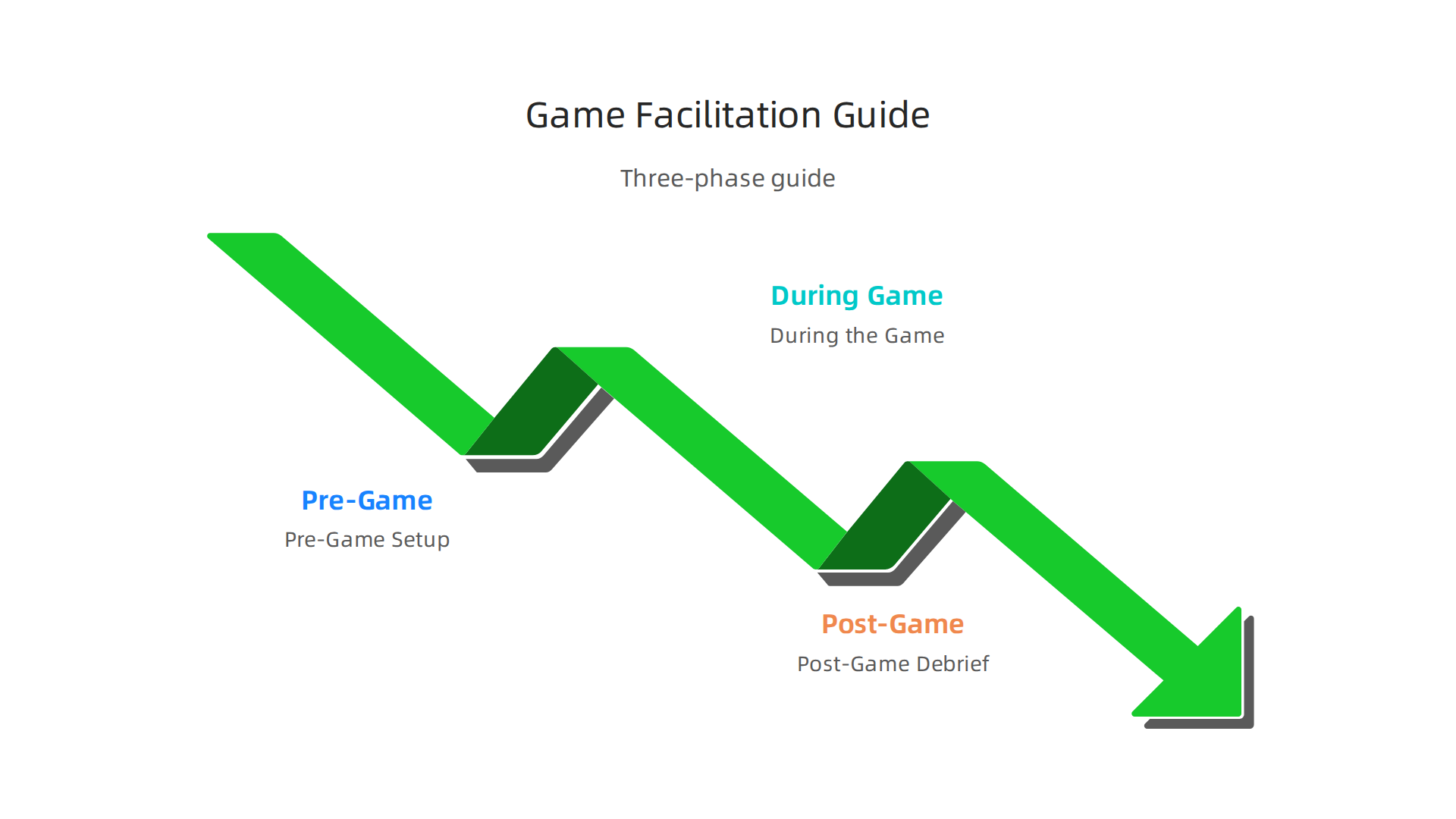
Phase 1: The Pre Game Setup
This is where most people trip up. You need three things sorted before anyone clicks a link.
First, your tech setup must be solid. Test your video platform, the game link, and your audio 10 minutes before start time. Nothing kills energy faster than waiting for someone to figure out how to share their screen. According to Eddy’s guide to virtual team building, clear instructions sent in advance reduce confusion and boost participation.
Second, explain the rules clearly but quickly. Send a one sentence summary in the chat before you start. For example, "We are playing Gartic Phone. You write a sentence, someone draws it, we all laugh." Keep it under 20 seconds. Long explanations drain the fun.
Third, set a time limit from the start. Say, "We are playing for exactly 10 minutes." This keeps people engaged and respects busy schedules.
Phase 2: During the Game
Your job as facilitator is energy management.

Keep your camera on. Smile. React to jokes. If someone is quiet, call on them gently. "Hey Sarah, what do you think?" A simple nudge brings shy team members into the game.
Watch for lag or confusion. If a game is not working, switch to a backup plan. I always keep a simple trivia question ready in case the main game breaks.
For inclusive play, remember that not everyone moves at the same speed. Let people type answers if they are uncomfortable speaking. The goal is participation, not pressure. The Museum Hack list of virtual team activities emphasizes that low pressure environments create the strongest bonds.
Phase 3: The Post Game Debrief
This is the step most leaders skip, and it is a mistake. A good debrief turns game fun into real workplace insight.
Spend two minutes asking simple questions:
- What did you enjoy most?
- When did you feel most connected to the team?
- What did this game teach us about how we work together?
For example, after a round of Codenames, someone might say, "I realized we need to be clearer with our instructions." That is gold. That is where team building becomes team improvement.
If your group struggled with communication during an escape room, talk about it. Ask, "How can we apply that lesson to our next project?" The Asana guide to team building games notes that debriefing solidifies learning and makes activities feel meaningful.
For an even deeper connection after the game, share something light. A funny story or a humorous book can spark natural conversation. Check out Visit Ridiculous for a witty comedy your whole team can read and discuss together. It turns a quick game into ongoing bonding.
Remember, your role is to guide, not to perform. Let the game do the heavy lifting. You just set the stage.
Measuring Engagement and ROI from Game-Based Activities
You just ran a fun game session. Everyone laughed. People seemed happy. But did it actually move the needle for your team? That is the question that keeps leaders up at night. The good news? Measuring engagement and return on investment does not have to be complicated.
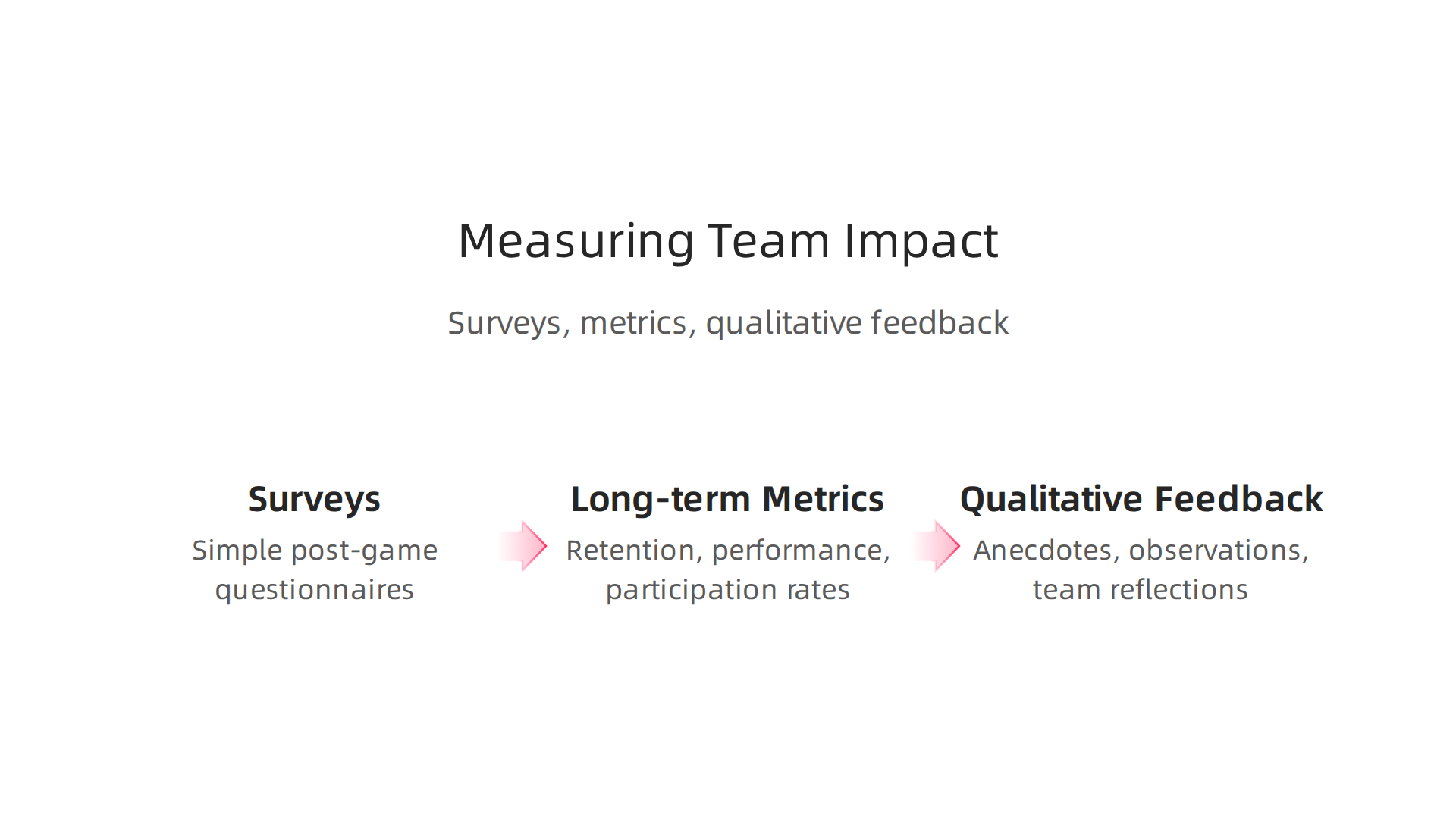
Start with simple surveys
Before you play a round of addicting games free online, send out a one minute survey. Ask two things: “How connected do you feel to the team right now?” and “How would you rate your energy level today?” Use a scale of 1 to 5. After the game, ask the same questions again. That is your pre and post comparison.
Free tools like Google Forms or SurveyMonkey make this easy. You can even do it right in Slack or Teams with a poll. The shift in scores tells you in seconds whether that team building activity lifted mood and connection. According to Gallup’s 2026 State of the Global Workplace report, only 20% of employees worldwide were engaged in 2025. That means most teams have room to grow. A simple pre and post check helps you see if your game is part of the solution.
Track longer term metrics too
A single game session is a snapshot. Real ROI comes from consistent effort. Every month, look at three numbers:
- Employee engagement survey scores
- Collaboration frequency (how often team members message or meet)
- Retention rates
If you run addicting games online free regularly, you should see these numbers creep up over time. The Achievers remote work statistics show that 29% of fully remote workers are engaged compared to 20% of on site employees. That gap shows that remote teams need extra effort to build bonds. Game based activities help close that gap, and tracking proves it.
What to measure qualitatively
Numbers are great. But stories matter too. After a few sessions, ask open ended questions:
- What changed in how you work with teammates?
- Did the game help you understand someone better?
One team leader told me that after a few rounds of a drawing game, a shy engineer started speaking up in meetings. That kind of change does not show up in a survey right away. But if you ask, you will hear it.
Make it a habit, not a one off
Measuring engagement once is not enough. Create a rhythm. Run a short team activity every week or two. Check in every quarter with a longer survey. Over time, you will see patterns. Some games boost energy more than others. Some teams prefer certain styles.
For teams that want to keep the momentum going, browse our 10 fun group games that build trust and drive team success. These are ready to use, and they pair well with your measurement plan.
Your next step
You do not need a big budget to measure impact. A free Google Form and ten minutes of planning are enough. Start today. Run a quick game. Send a survey. Watch the numbers improve.
If you want help tailoring a measurement approach for your specific team, contact us. We will share practical strategies to track engagement and prove the value of every team building activity you run.
Overcoming Common Pitfalls and Sustaining Engagement
By now you know how to measure the impact of your team building activities. That is a big step. But even the best planned session can hit a snag. Let me walk you through three common problems and how to fix them. Then we will talk about keeping the fun alive long term.
The over-competitive trap
Some people love to win. That is fine in moderation. But when a game gets too competitive, it can leave people feeling bad. You might see sulking, fake smiles, or quiet resentment. That is the opposite of what you want.
The fix? Set clear expectations upfront. Tell the group: “The goal is connection, not competition.” Choose cooperative games over ones that crown a single winner. There are plenty of team building activities that focus on collaboration rather than rivalry. When everyone works together, nobody loses.
Technical glitches ruin the flow
Nothing kills the mood like a frozen screen, bad audio, or a game that will not load. This happens more often than you think, especially with remote teams.
Here is a simple solution. Test everything ten minutes before the session. Have a backup plan. If you are using addicting games free online, check that all players can access the site. Keep a low tech icebreaker ready, like “Two Truths and a Lie,” in case the tech fails.
Shy team members stay quiet
Some people freeze when they have to talk in front of the group. They hide behind a blank screen or say nothing. That does not mean they are not engaged. It means they need a different entry point.
Rotate facilitators. Let different people lead each round. This spreads the spotlight and takes pressure off the quiet ones. You can also use written responses first, like a quick chat poll, before asking anyone to speak. The goal is to make everyone feel safe enough to join.
Keeping the momentum going
Measuring engagement once is good. Sustaining it is better. You need a rhythm. Schedule a short team building activity every week or two. Rotate the type of game. One week try a trivia game. Next week try a scavenger hunt. The novelty keeps excitement high.
Also align the games with your team goals. If you are trying to improve communication, pick a game that forces people to talk. If you want to boost creativity, try a drawing or story game. When the activity matches the need, people see the value.
If you are looking for fresh ideas that keep teams coming back, check out our list of free online games for team engagement that actually work. It is full of easy, no prep options.
Your next move
You already know how to measure the results of your team building. Now handle the bumps. Set the tone. Have a backup. Include everyone. And keep changing things up.
Need help tailoring a plan that avoids these pitfalls and keeps your team coming back for more? Contact us. We will share practical strategies that work for real teams.
Summary
Remote and hybrid teams often struggle with engagement, and this article shows how free, addicting online games can be an inexpensive, practical way to build connection and trust. It explains the science behind play—autonomy, mastery, relatedness—and gives a simple three‑filter framework (team size, time, desired outcome) to pick games quickly. The guide reviews six top browser‑based, no‑download games (GIF Battles, Gartic Phone, Codenames Online, virtual escape rooms, Werewolf, and trivia), with ideal group sizes, time estimates, and benefits for each. It also walks leaders through facilitation: pre‑game tech checks, during‑game energy management, and a short post‑game debrief to turn fun into insight. You’ll find easy measurement tips—use quick pre/post 1–5 surveys and track engagement, collaboration, and retention over time—and practical fixes for common problems like over‑competitiveness, tech glitches, and quiet participants. The article emphasizes making game sessions regular, low‑pressure, and aligned with team goals so small investments produce real cultural and performance gains. Links to curated resources and related guides help teams implement these ideas immediately.