
Introduction
Every manager wants to build a dream team. But the term "dream team" often feels too vague or overused. You might picture a group that clicks perfectly. In reality, many teams today face real struggles. Low engagement. Poor communication. Weak bonds between members. These problems drain energy and hurt results.
So what sets a real dream team apart? A high-performing team is a group of creative and engaged people working toward a shared goal.

They use their unique strengths and diverse views to achieve great things. According to Deloitte, human capabilities like trust and empathy are at the heart of high-performing teams. The best teams also share universal traits such as trust, discipline, and adaptability.
This guide moves past the buzzwords. It gives you a clear path forward. You will find practical team building questions to spark honest conversations. We will also cover useful team building synonyms to change how you see your group. Every section focuses on value added activities that build real connection and drive results. By the end, you will have a tool kit to make your vision of a dream team a reality.
Ready to dive deeper? Check out how a team leader makes team building programs actually work. It provides a solid starting framework for any leader.
If you need personalized guidance or ready-to-use activities, contact us. We help busy managers and HR pros build better teams every day. Let us build your dream team together.
What Does ‘Dream Team’ Really Mean? Defining the Concept and Its Synonyms
You hear the phrase "dream team" a lot. It gets thrown around in meetings, on LinkedIn, and in team updates. But what does it actually mean? Most people picture a group of superstars working side by side. They imagine perfect chemistry and instant success.
Here is the truth. A dream team is not just a collection of top performers. It is a cohesive unit with shared goals, deep trust, and complementary skills. According to Workhuman, a high-performing team is "a group of creative and engaged individuals working together to achieve a common goal." That is the real definition. It is about connection and collaboration, not individual brilliance alone.
Think of it this way. A group of all-stars who do not communicate well will fail. A group of solid players who trust each other and share a clear purpose can achieve extraordinary results. That is the dream team you want to build.
Synonyms That Capture the Same Idea
The term "dream team" is popular, but there are many team building synonyms that describe the same kind of group.
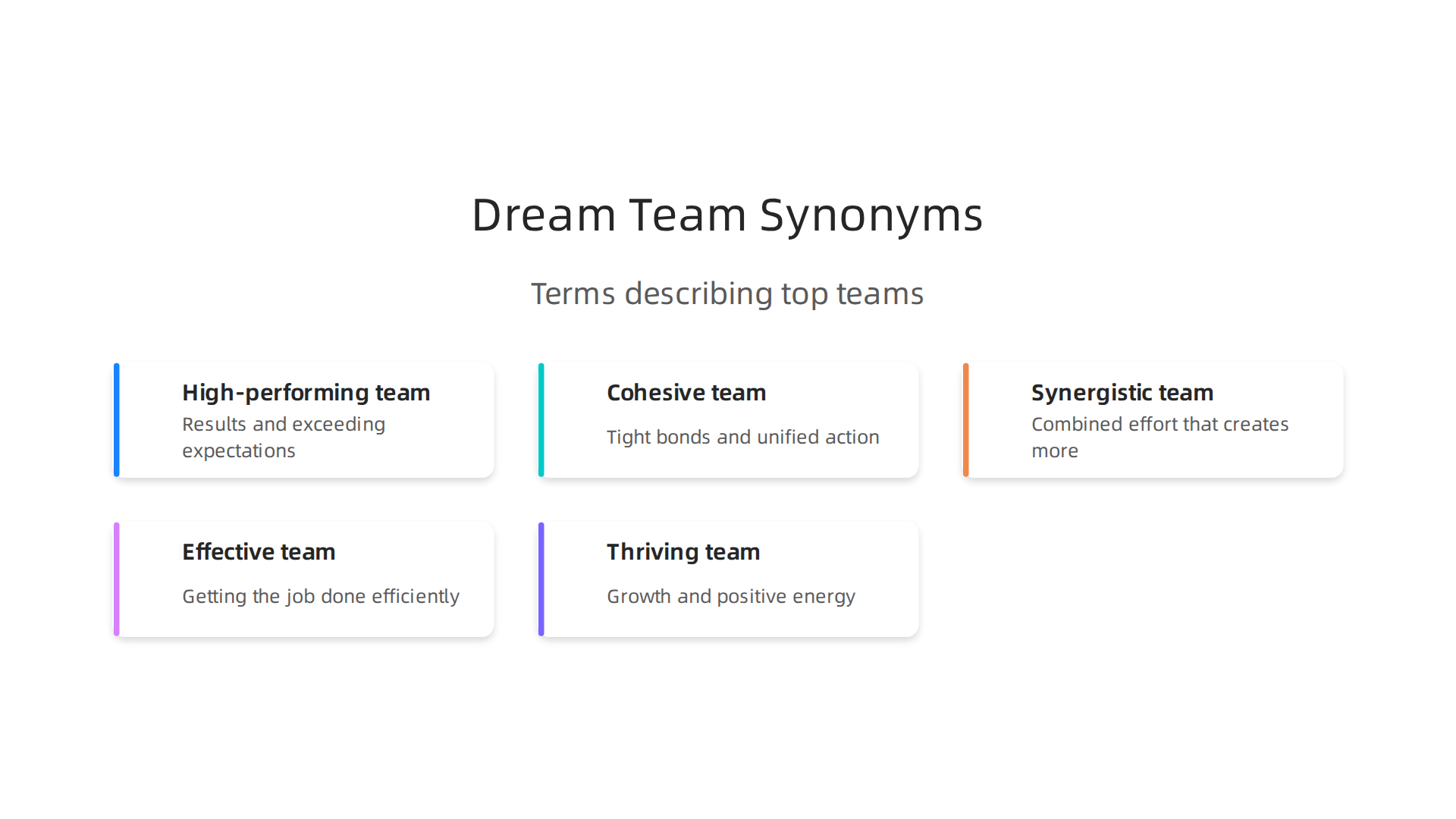
Knowing these team building terms can help you talk about your goals more clearly. Here are a few common ones:
| Synonym | What It Emphasizes |
|---|---|
| High-performing team | Results and exceeding expectations |
| Cohesive team | Tight bonds and unified action |
| Synergistic team | Combined effort that creates more than the sum of parts |
| Effective team | Getting the job done efficiently |
| Thriving team | Growth and positive energy |
The Power Thesaurus lists many other options like efficient employees, productive team, and self-motivated team. Each synonym highlights a different strength. But they all point back to the same core: a group that works well together.
Why the Definition Matters for Leaders
Understanding the true meaning of a dream team helps you avoid a common trap. Many leaders think dream teams only exist in elite sports or big tech companies. They assume it takes rare talent or huge budgets. That is a myth.
The traits of high-performing teams are universal. As research from IMD shows, these teams share trust, discipline, adaptability, and a willingness to challenge the status quo. Any team, in any industry, can develop these qualities. Deloitte also points out that human capabilities like empathy and trust are at the heart of high-performing teams. You do not need superstars. You need the right culture and habits.
So start by shifting your mindset. A dream team is not something you hire. It is something you build, step by step, through value added activities that create real connection.
If you want practical ways to turn these ideas into everyday action, check out this guide on design principles for team collaboration. It shows you how to fix communication problems and build trust naturally.
And if you need personalized help or ready-to-use activities, contact us. We work with busy managers and HR pros to turn any group into a dream team. Let us help you take the next step.
The Value of a Dream Team: Why It Matters for Engagement, Retention, and Performance
So why should you spend time and energy building a dream team? Because the payoff is huge. It is not just about feeling good at work. A truly cohesive team directly boosts engagement, keeps your best people around, and drives real business results.

Let us look at the numbers. In 2026, Gallup found that only 31% of U.S. employees are actively engaged at work.
That means nearly 7 out of 10 workers are just going through the motions. That is a problem. But here is the good news. When people feel part of a cohesive team, engagement skyrockets. As research from Pollack Peacebuilding shows, when employees feel their contributions matter and they belong to a supportive group, engagement levels soar.
And engagement is not just a feel-good metric. Teams with strong engagement consistently outperform others. According to Thirst, engaged teams achieve 18% higher productivity. They also show stronger collaboration and resilience. That is the kind of performance every leader wants.
Lower Turnover, Higher Retention
One of the biggest costs for any organization is losing good people. Replacing an employee can cost 50% to 200% of their annual salary. The stress on the team is real too. But dream teams keep people around.
Data from Zoom shows that highly engaged employees turn over 51% less in low-turnover organizations. In high-turnover companies, the rate is still 21% less. When people trust their teammates and feel connected, they do not want to leave. They feel like they belong.
Building a dream team is one of the most effective employee retention strategies for 2026. You do not need big salary bumps or fancy perks. You need a culture where people feel valued, heard, and part of something bigger.
Better Innovation and Adaptability
Dream teams do not just execute tasks well. They innovate. When team members trust each other, they share ideas without fear. They challenge each other respectfully. That leads to better solutions and faster adaptation to change.
Atlassian recommends running a Team Health Monitor on a regular basis to track how your team is doing. This kind of checkup helps you spot problems before they grow. It also keeps the team focused on continuous improvement. When your team is healthy, you adapt quickly to market shifts and new challenges.
The Bottom Line Impact
Here is the simple truth. A dream team is a competitive advantage. Higher engagement means more productivity. Lower retention means less hiring cost. Better innovation means you stay ahead.
A Gallup report from 2026 showed that low engagement costs the global economy $10 trillion in lost productivity. That is a staggering number. But you can turn it around. By investing in team cohesion and trust, you save money and make more money at the same time.
How to Start Measuring the Value
You cannot improve what you do not measure. Start tracking a few simple metrics:
- Employee engagement survey scores
- Turnover rates in your team
- Team health scores from quarterly check-ins
- Productivity and project completion rates
These numbers will show you the impact of your team building efforts. They also help you justify the time and budget you put into value added activities.
If you want a simple framework to get started, check out this guide on team health assessment. It gives you 12 leading indicators to track before problems grow.
Your Next Step
The data is clear. A dream team is not a luxury. It is a smart business move. And you do not need to overhaul your whole organization overnight. Start small. Run a team health check. Pick one activity that builds trust.
Need help getting started? We work with managers and HR pros who want to see real results without wasting time on awkward or forced activities. Contact us to find the right approach for your team. We will help you turn your group into a dream team that sticks.
Key Questions to Ask When Building or Assessing Your Dream Team
You know the numbers now. A dream team boosts engagement, cuts turnover, and drives results. But how do you know if your team is actually there? You need to ask the right questions.
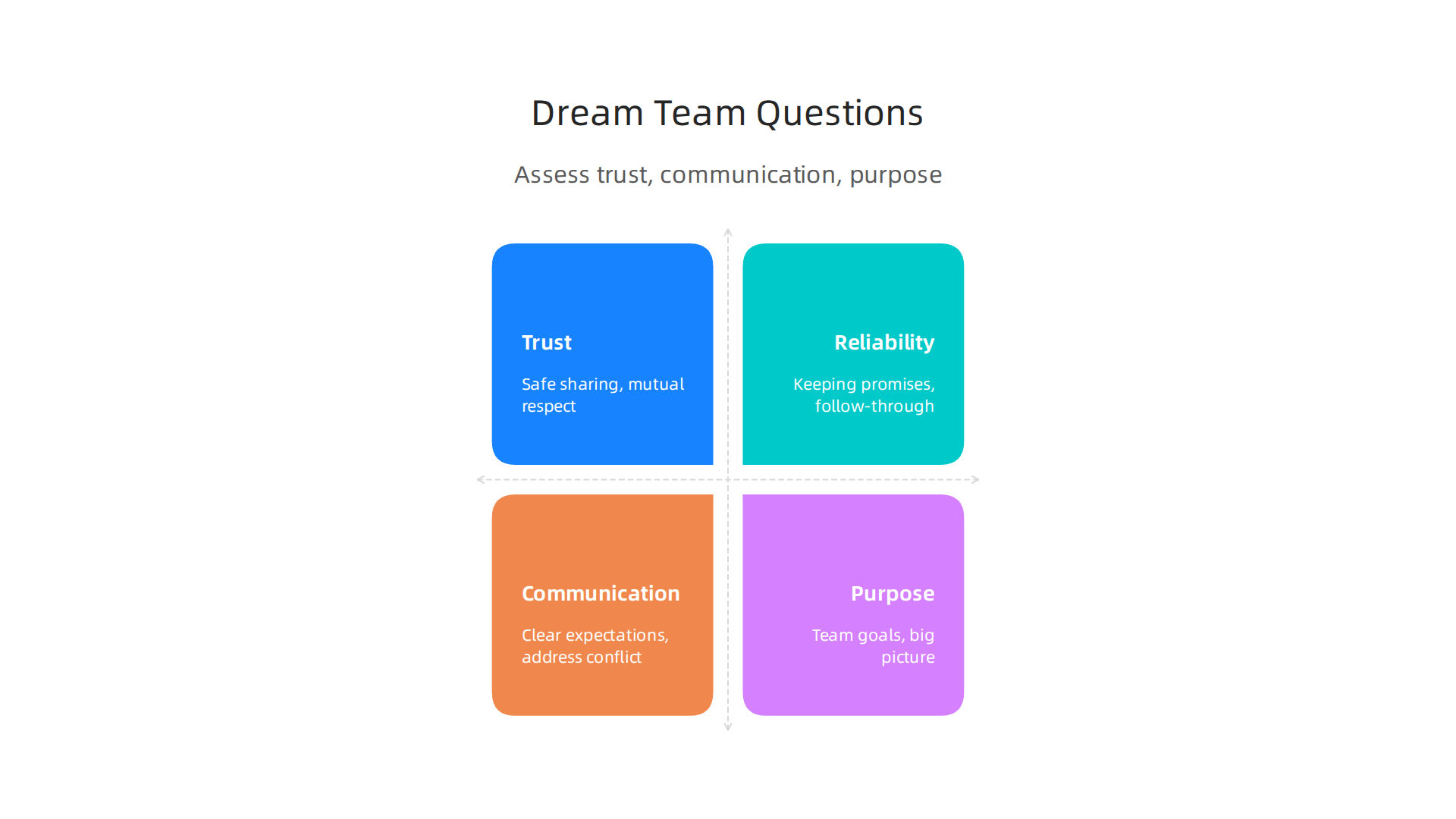
Diagnostic questions uncover gaps you might not see. They reveal problems with trust, communication, and shared purpose.

And they give you a clear path forward. As Quantum Workplace explains, high performing teams leverage collective skills and diverse perspectives. But you only find those strengths when you look for them.
Questions That Reveal Trust
Trust is the foundation. Without it, nothing else works. Try asking your team these questions:
- Do I feel safe sharing a mistake or bad idea with my teammates?
- When I disagree with someone, do I feel respected?
- Do team members keep their promises and follow through?
These questions dig into psychological safety. The team assessment sample questions from CustomInsight include items like these. Use them to spot trust issues early.
Questions That Test Communication
Communication problems hide in plain sight. Ask:
- Do I clearly understand what my teammates expect from me?
- When we have a conflict, do we address it directly?
- Do meetings actually move us forward, or do they waste time?
A simple set of questions to assess your team culture from Great Results Teambuilding suggests asking what the team does well and what needs improvement. That simple prompt often reveals communication breakdowns.
Questions About Shared Purpose
A dream team knows why they exist. To check this, ask:
- Do I know the team’s top goal for this quarter?
- Does my work connect to the bigger picture?
- Do we celebrate wins together?
When people see their contribution to a larger mission, engagement jumps. Deloitte research shows human capabilities like purpose drive high performance.
Individual vs. Team Level
Some questions target the whole group. Others need individual answers. For example:
- Team level: "How would you rate our team’s ability to adapt?"
- Individual level: "Do I feel my unique skills are used well?"
Both angles matter. A team can look healthy overall while individuals feel invisible.
Make Assessment a Habit
One checkup is not enough. Regular assessment helps you track progress toward dream team status. MyCulture.ai lists free team building assessments for 2026 that you can use every quarter.
Think of it like a health check. You do not visit a doctor once and call it good. Your team needs the same ongoing care.
A Simple Way to Build Connection
As you assess, remember that connection also comes from shared experiences. One easy idea is to read a funny book together and talk about it. Laughter builds bonds. If you want a lighthearted start, you can Explore the Series "The Ridiculous" for team laughs and discussion prompts. It is a low pressure way to open up conversations.
The questions in this section will reveal where your dream team is strong and where it needs work. Use them. Repeat them. Watch your team grow.
From Conflict to Cohesion: Overcoming Common Team Dynamics Pitfalls
Asking the right questions is a great start. You now know where your dream team stands. But knowing the problem is only half the battle. The real work is fixing the issues you find. Here is how to turn conflict into cohesion.
The Common Roadblocks
Most teams hit the same walls. Poor communication shows up as missed messages and confusion. Lack of psychological safety means people stay quiet instead of sharing ideas. And unresolved conflict festers until it poisons everything.
These problems do not fix themselves. You need practical tools to break through them.
Practical Interventions That Work
Start with structured feedback. Set up a simple system where everyone shares one thing that went well and one thing to improve after each project. Keep it short. Keep it regular. This builds honesty without blame.
Team agreements also help a ton. Write down the rules for how you work together. How do you make decisions? How do you handle disagreements? Putting it in writing removes doubt.
For virtual teams, these challenges get bigger. Without body language and casual chats, misunderstandings happen faster. That is why tailored approaches matter so much. Activities like virtual puzzle competitions or online Pictionary can break the ice and rebuild connection naturally. The best virtual team activities in 2026 work because they create shared experiences, not just another video call.
Unique Challenges for Remote and Hybrid Teams
Remote teams deal with isolation and silence. People hesitate to speak up on Zoom. Hybrid teams have it even harder. The people in the room often get more attention than the ones on screen.
To fix this, use digital tools that level the playing field. Try a team fitness challenge or a shared walking competition. Games like two player unblocked options can create quick bonds during a break. The key is to make everyone feel included no matter where they sit.
A Simple Way to Start
You do not need a big budget or a fancy retreat. Sometimes the simplest thing works best. Pick a fun activity that everyone can do together. Laughter is a fast track to trust.
If you want a lighthearted way to open up your team, Explore the Series "The Ridiculous." It gives you easy laughs and conversation starters that work for any group, whether you are all in the same room or scattered across time zones.
Turn those common pitfalls into stepping stones. Your team will feel the difference.
Practical Activities and Exercises to Strengthen Your Dream Team
You have worked through the common roadblocks. Your team feels more connected and less tense. But the real test is keeping that momentum going. The best way is with simple, fun activities that become part of your routine.
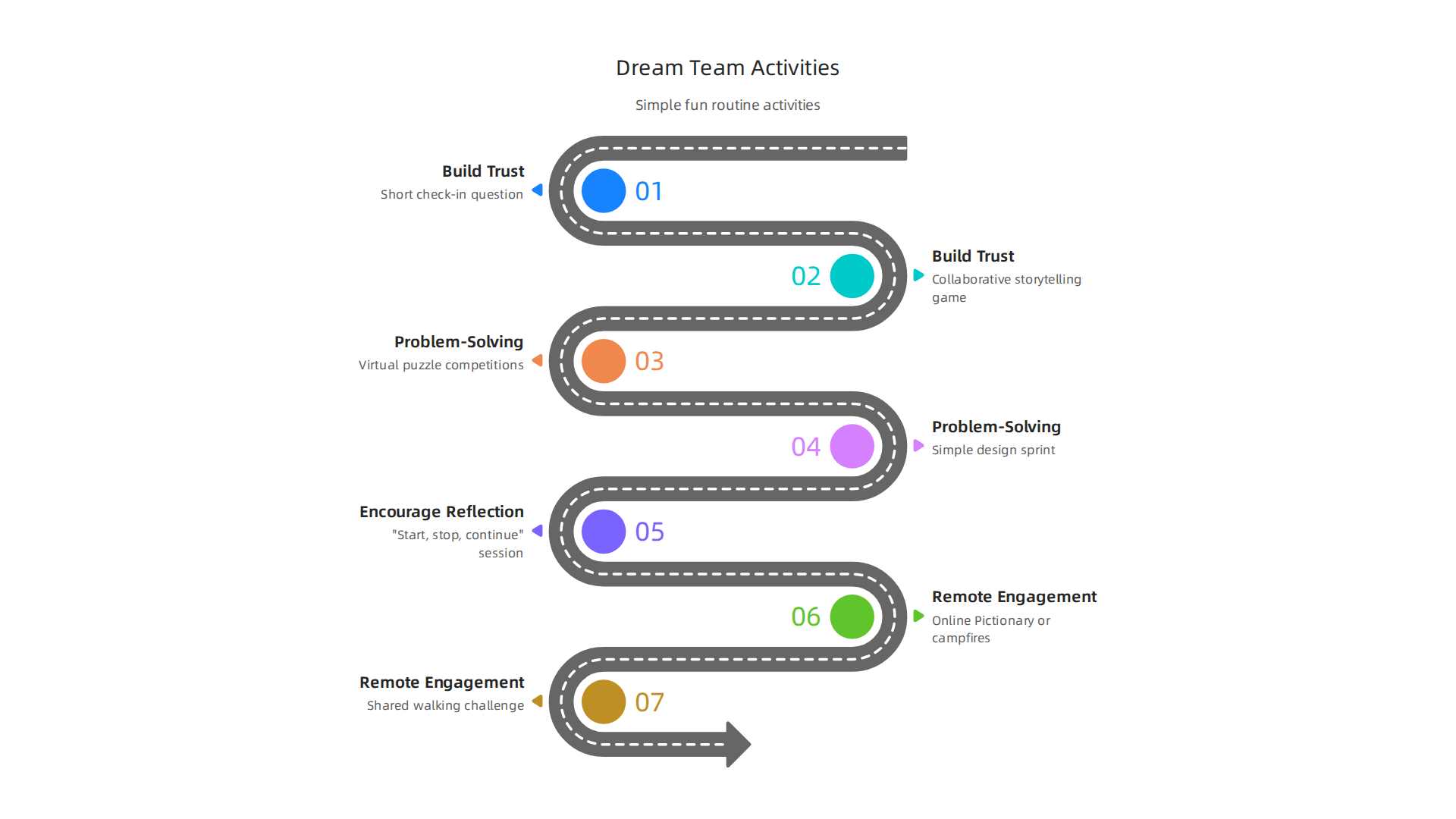
Here is the thing. You do not need a big budget or a fancy retreat. Quick, low-cost exercises you weave into regular meetings work just as well. In fact, they often work better because they are consistent.
Activities That Build Trust
Trust grows when people share experiences. Try starting your next meeting with a short check-in question. Ask something like "What is one win you had this week?" or "What is a challenge you are facing?" Keep it to two minutes per person.
Another great option is a collaborative storytelling game. Each person adds one sentence to a shared story. It sounds silly, but it builds listening skills and creativity fast. You can find ideas for this in the top team building activities for remote, hybrid, and on-site teams in 2026.
Activities That Improve Problem-Solving
Problem-solving exercises push your team to think together. Virtual puzzle competitions are perfect for this. Teams race to solve a challenge in a set time. It teaches patience and clear communication under pressure.
You can also try a simple design sprint. Give your team a real problem to solve in one hour. Have them sketch ideas, share them, and pick the best one. This combines creativity with teamwork.
Activities That Encourage Reflection
Reflection helps your team spot what works and what does not. After a project ends, run a quick "start, stop, continue" session. Everyone shares one thing to start doing, one to stop, and one to keep doing.
This builds honesty without blame. It also makes your team smarter over time. Teams that reflect regularly perform better.
Making Activities Work for Remote Teams
Remote teams need activities that include everyone equally. Online Pictionary, virtual campfires, and fitness challenges all work great. Many of these team building activities for work in 2026 are designed for hybrid settings.
For an easy starting point, try a shared walking challenge. Teams log steps together over a few weeks. It builds connection without pressure. You can also use free online word games for remote teams to create quick fun during breaks.
Pick One and Start
Do not overthink this. Pick one activity from this list and try it this week. Keep it short. Keep it regular. Your dream team will feel the difference fast.
If you want a lighthearted way to create shared laughs and conversation, Explore the Series "The Ridiculous." It gives you easy discussion prompts that work for any group, anywhere.
Measuring Team Health: Metrics and Indicators of a Dream Team
You have run the activities and built a stronger connection. But how do you know if your team is actually getting healthier? Guessing is risky. The best leaders use data and honest feedback to see what is working.
Think of it like checking the gauges in your car. You want to know your speed, fuel level, and engine temperature before something breaks. The same goes for your dream team. You need a few key numbers and signs to tell you if things are good or if you need a tune-up.
Key Numbers to Watch
Start with the numbers that matter most. These are your quantitative metrics.
Engagement scores are a big one. In 2026, only 31% of U.S. employees are actively engaged at work according to Paycor. That means most teams have room to grow. If your engagement scores are low, your team is not at its best.
Turnover rates tell you if people want to stay. Highly engaged employees are 51% less likely to leave their jobs, as Zoom reports. If you see a sudden spike in departures, something is off.
Project completion rates show if your team actually delivers. Teams with strong engagement have 18% higher productivity, according to Thirst. When your team hits deadlines and produces quality work, you know the dream team is firing on all cylinders.
The Human Side of Health
Numbers do not tell the whole story. You also need to look at qualitative indicators like team morale and innovation frequency.
How often do people share new ideas? Do they laugh during meetings? Do they help each other without being asked? These are signs of a healthy culture. One simple way to track this is with a team health monitor that you run every quarter.
This gives you a quick read on how people are feeling.
Another option is to use a team health assessment framework that lists 12 leading indicators. These signals can predict problems before they become big issues.
The Balanced Scorecard Approach
Do not rely on just one number. Instead, create a simple scorecard that combines both types of data.
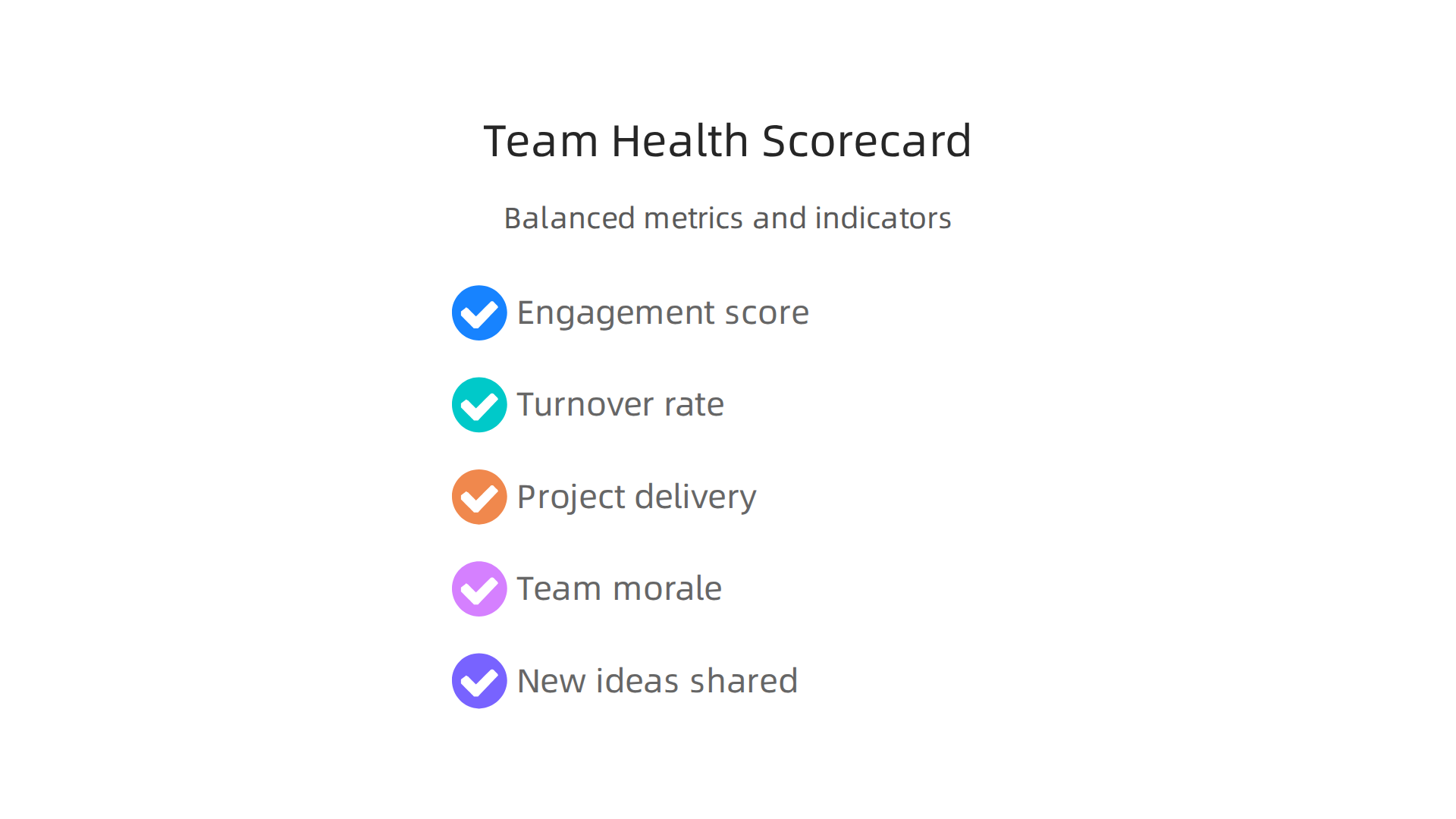
For example:
| Metric Type | Example | How Often to Check |
|---|---|---|
| Quantitative | Engagement survey score | Quarterly |
| Quantitative | Turnover rate | Monthly |
| Quantitative | On-time project delivery | Per project |
| Qualitative | Team morale (from check-ins) | Weekly |
| Qualitative | Number of new ideas shared | Monthly |
This mix gives you a full picture. When one gauge is low, you know where to focus your energy.
Use the Data to Keep Improving
Once you have your metrics, do not just file them away. Share them with your team. Talk about what is working and what needs work. Then pick targeted activities to address weak spots. For example, if communication scores are low, try a quick low-prep game designed to build better listening skills.
Measuring team health is not a one-time task. It is an ongoing habit. When you track the right things, you keep your dream team strong and ready for anything.
If you want a proven way to improve those numbers with simple activities, Contact Us for tailored guidance that can boost your team’s engagement and collaboration.
Leadership’s Role in Cultivating a Dream Team Environment
You have the numbers from the last section. You know where your team stands. But now you need to improve those numbers. That is where leadership comes in. A dream team does not happen by accident. It is built on purpose by someone who knows how to set the right tone every single day.
Leaders Set the Tone for Safety and Vision
Your main job as a leader is to make sure people feel safe to speak up.

When team members are afraid to fail, they stop taking smart risks. They hide problems instead of solving them. Research on exemplary leadership shows that teams with high psychological safety are the ones that perform best. You set this tone by being open about your own mistakes. You also need to make the team vision crystal clear. When everyone knows where they are going, they move together.
Different leadership styles can totally change how your team works together. The way you assign tasks and give feedback shapes the whole team dynamic. If you want to learn more about how your style affects your people, the FAQ on leadership styles and team performance breaks it down well.
Modeling the Behavior You Want to See
Here is the simple truth. Your team pays more attention to what you do than to what you say. If you want accountability, show it first. If you want trust, give it freely. If you want open communication, start the conversation.
According to research on standout leadership behaviors, the best leaders build highly engaged teams by staying calm under pressure and making strong decisions. These actions tell your team exactly how to act. Empowering leaders who model these behaviors every day are the ones who build a real dream team. You cannot skip this step.
Training and Coaching Multiply Your Impact
You do not have to figure all this out alone. The best leaders invest in their own growth. When you get better at coaching, your whole team gets better too. This is a true value added activity that pays off over and over again.
A big part of this is asking the right team building questions. Instead of telling people what to do, ask them what they think. Instead of giving orders, invite solutions. This shift in language changes the whole team culture.
If you want practical tools to build these skills, check out this guide on how a team leader makes team building programs actually work. It gives you a clear path forward with steps you can take today.
Another simple way to build connection is to share something fun. A light story can open up conversations that feel hard. Why not Visit Ridiculous to find a book that gets your team laughing and talking together? Sometimes the best team building synonyms for "work" are "play" and "laugh."
Ready to take your leadership to the next level? Contact Us for tailored guidance that can boost your team’s engagement and collaboration.
Summary
This article shows managers and HR pros how to turn the vague idea of a